Showing posts with label ethical purchases. Show all posts
1.13.2014
Green 'n clean carpet follow-up
I meant to spend some time with a few rugs this past weekend, testing out the Earth Friendly Products Carpet Shampoo. Between Fox officially crawling (and trying to crawl up the stairs) and prepping for a 30 day detox I didn't get to all of the rugs, but I did try out the goods.
The EFP shampoo is more concentrated than the Bissell (uses 1.5 oz to Bissell's recommended 2.5 oz). It also uses essential oils for fragrance rather than artificial fragrance, which meant I didn't end up with a migraine post-use. In fact, the EFP fragrance was pretty much undetectable after the rug dried, the Bissell lingered for the next 24 hours or so.
Did it clean as well? Absolutely. I cleaned this small rug from C's and my bedroom, one that sees the most traffic in that room. Though it's relatively new, it needed some attention. For several weeks M had a nighttime cough that I approached with Hyland's Cough Syrup (disappointingly, I realized it has Sodium Benzoate, so out it goes) and raw, local honey. There were spots of gunk across the carpet thanks to the combination of those 2 sticky substances plus nighttime doses.
A quick steam and the dirty water that cycled back into the tank was a murky medium brown. I still had some clean water and shampoo in the tank, so I used it up on an area of the main rug in the den...that very same rug we'd cleaned 2 weeks ago. The 3'x5' area of that rug cycled black water back into the tank. Total yuck to the nth degree.
The visible results: The sticky mess from the bedroom rug is gone. A few of the stains on the larger carpet are significantly less visible than they were after the Bissell round.
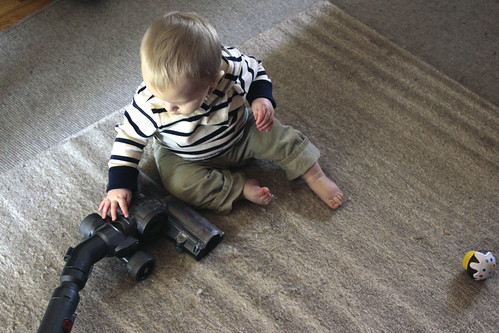
The short of it: I'm glad I researched and decided to try this particular carpet cleaner! While I'm pretty sure nothing can return our carpet to it's new glory, I can definitely breathe easier having little hands and feet playing on it all the time.
11.29.2012
Under $50
I've been asking around on Twitter and Facebook a fun question just in time for the holidays:
If you bought yourself a handmade gift for under $50, what would it be? Here are a few answers so far:
POAST house wanted by Toil and Trouble (Ana)
Suite One Studio bowls wanted by Made in Lowell (Liz)
Stone and Honey tiny triangle rings (2 at $20 each) wanted by Megan Charland
Forged Copper Gingko Leaf wanted by Trowel and Paintbrush (Kathleen)
Bird Brain Tile by Rob Ryan wanted by Bugs and Fishes (Laura)
So, how about you? If you bought yourself a handmade gift for under $50, what would it be? Leave a comment and include a link!
7.23.2012
Monday Musings
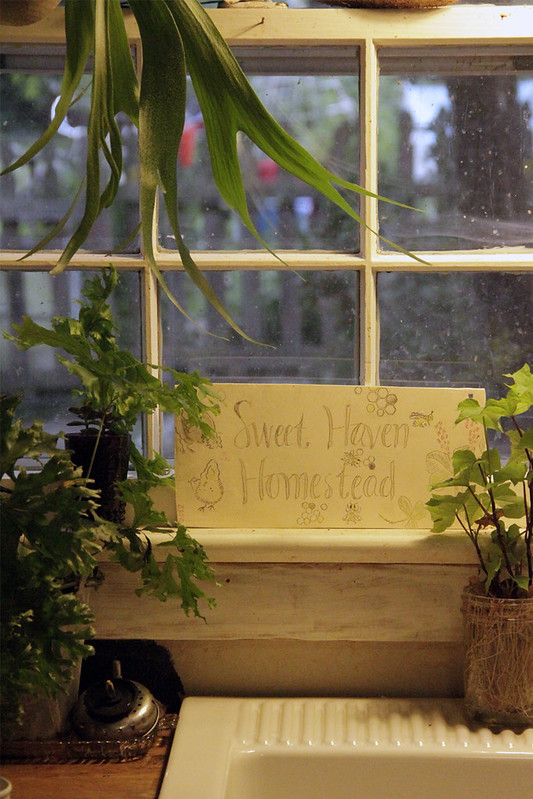
A plaque I commissioned from Melissa Bridgman. As soon as the porch is finished it will find its permanent home. In the meantime, I love seeing it in our kitchen window.
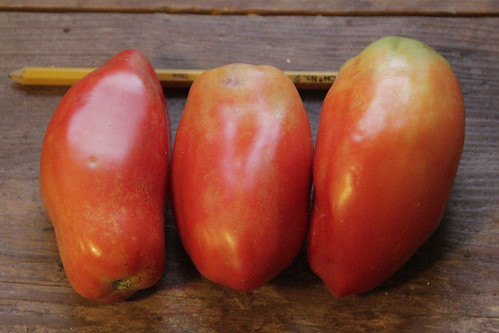
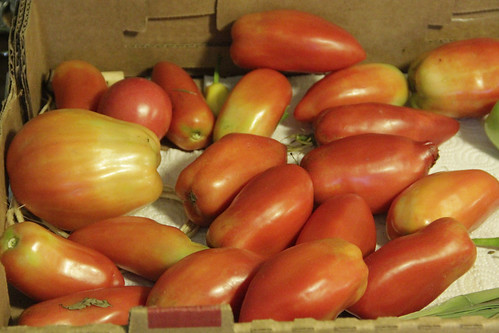
Long Tom paste tomatoes (pencil for scale): Delicious, giant, and virtually seedless. I'm in love with these tomatoes, the plants are dripping with tomatoes. The harvest (below) is one day's harvest from 3 plants. I have to pick them just slightly earlier than ripe or the rabbits will taste every single one.
5.07.2012
Independent Suppliers: Fire Escape Farms
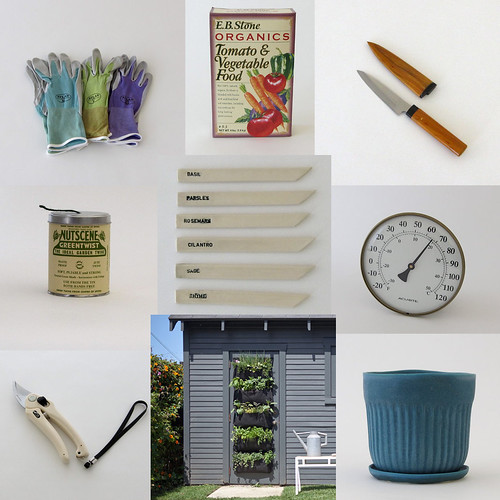
This is going to sound like a commercial, but I promise this is a little post about an online store that I keep visiting {weekly!} for a bit of window shopping .
Have you ever visited Fire Escape Farms' website? Geared toward the apartment gardener but is packed full of high-quality tried and true products for all kinds of gardeners, the shop is packed full of beautifully designed essentials. Hard working and easy on the eye, that's what we all need more of.
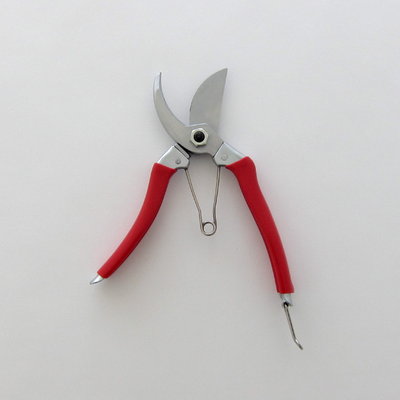
This, though...These pruners are what keep me going back.
In the past 6 years I've probably been through as many pairs of pruners. Rusty blades, dirt getting into the spring mechanism, and most recently a chunk of metal fell out of the blade of my Fiskars when I opened them to prune something. I think I pretty much deserve a Cadillac, don't I? Seems it's time to stop window shopping and go in and make that purchase!
Have you ever visited Fire Escape Farms' website? Geared toward the apartment gardener but is packed full of high-quality tried and true products for all kinds of gardeners, the shop is packed full of beautifully designed essentials. Hard working and easy on the eye, that's what we all need more of.
This, though...These pruners are what keep me going back.
The ARS 120S-8 is the cadillac of Pruners. Made of high chrome steel it is coated with hard-chrome to resist rust and sap. A professional grade pruner, it creates smooth clean cuts and wipes clean easily. The metal handle is coated with rubber for easy ergonomic handling and is the perfect size for most hands.
In the past 6 years I've probably been through as many pairs of pruners. Rusty blades, dirt getting into the spring mechanism, and most recently a chunk of metal fell out of the blade of my Fiskars when I opened them to prune something. I think I pretty much deserve a Cadillac, don't I? Seems it's time to stop window shopping and go in and make that purchase!
4.26.2012
Souls and Soles
It's been a while since we did a little compare and contrast. Today we'll look at TOMS shoes vs Skechers' brand BOBS. Since the picture I put together explains most of the details I won't touch on those, except to say the curly brown haired guy on the left is Blake Mycoskie, founder of TOMS; the curly haired dude on the right is, as far as I can tell, just some dude they found to put on the website for BOBS. Perhaps the obviously profit-minded Skechers could adopt a new slogan: Soulless Shoemaker.
1.26.2012
down wind of chemical stench
My lengthy dislike for Scotts MiracleGro products started when I was just getting interested in gardening. Scotts was suing TerraCycle for using green and yellow on their packaging, though I never really believed that was all it was about. Perhaps a small start up company with a great idea for reused packaging and simple organic ingredients was putting a hurting on a major corporation's profits. Whatever it was, Scotts image seemed like the popular football star stuffing a nerdy kid in a locker.
Companies like Scotts promote chemical use in the garden, persistent chemicals that perpetuate reliance for gigantic yields and "weed-free" gardens. They promote the idea that a singular plant (grass) is the only acceptable basis of a beautiful, lush yard. A single variety plant space, such as a weed free lawn, is known as a monocrop, and a monocrop's lack of diversity can create all sorts of issues that need other synthetic products to resolve.
I won't get into the many uses of weeds...well maybe for just a second--some of those weeds might replace your prescription medicine, others could be pulled up and used to make an organic plant food, yet others simply feed the wildlife in your yard. Perhaps if the critters had natural forage they wouldn't go after your tomatoes and you wouldn't need that Scotts brand pesticide after all.
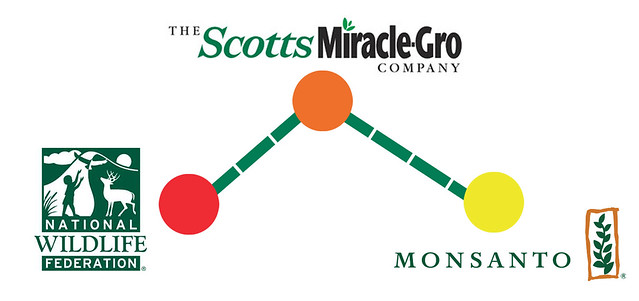
The more I learn about gardening, the more I learn that popular kid in the green and gold uniform had a few unsavory secrets. Enter stage left: Monsanto, wealthy, smooth-talking hip best friend to Scotts. Monsanto's own GMO-tainted politics does nothing to endear me to Scotts.
To put my feelings into perspective, let's talk about something most people have some level of concern about: the honeybees. We've all heard about the rapid decline of bee populations and what will happen if they keep mysteriously dying. Bees an accessible environmental issue: less bees, less pollination, less productive crops, less food, higher food prices, food shortages...you get the idea. Scotts sells all sorts of weed killer monocrop the hell out of your yard. Make it all grass, get rid of that nasty clover...that nasty clover that bees find so useful as a source of food. Yeah, food, that little thing that keeps us all alive. Of course, Scotts' BFF Monsanto, the company that sues farmers whose crops have accidentally cross-pollinated with Monsanto GMO crops. The GMO crops that may or may not contribute to the decline of bee populations, certainly contributing to the loss of monarch butterfly populations (another handy insect that pollinates plants).
And then the National Wildlife Federation announced its partnership with Scotts. Frankly I took the news personally. I felt like an old friend went and made out with the dude that used to tease me every day about being flat-chested. Betrayal.
How do you feel about the partnership? Care, don't care, wish I'd saved my breath for some pretty furniture and lovely pictures?
* * *
You Grow Girl and Native Plants and Wildlife Gardens discuss the new partnership on their blogs.
Companies like Scotts promote chemical use in the garden, persistent chemicals that perpetuate reliance for gigantic yields and "weed-free" gardens. They promote the idea that a singular plant (grass) is the only acceptable basis of a beautiful, lush yard. A single variety plant space, such as a weed free lawn, is known as a monocrop, and a monocrop's lack of diversity can create all sorts of issues that need other synthetic products to resolve.
I won't get into the many uses of weeds...well maybe for just a second--some of those weeds might replace your prescription medicine, others could be pulled up and used to make an organic plant food, yet others simply feed the wildlife in your yard. Perhaps if the critters had natural forage they wouldn't go after your tomatoes and you wouldn't need that Scotts brand pesticide after all.
The more I learn about gardening, the more I learn that popular kid in the green and gold uniform had a few unsavory secrets. Enter stage left: Monsanto, wealthy, smooth-talking hip best friend to Scotts. Monsanto's own GMO-tainted politics does nothing to endear me to Scotts.
To put my feelings into perspective, let's talk about something most people have some level of concern about: the honeybees. We've all heard about the rapid decline of bee populations and what will happen if they keep mysteriously dying. Bees an accessible environmental issue: less bees, less pollination, less productive crops, less food, higher food prices, food shortages...you get the idea. Scotts sells all sorts of weed killer monocrop the hell out of your yard. Make it all grass, get rid of that nasty clover...that nasty clover that bees find so useful as a source of food. Yeah, food, that little thing that keeps us all alive. Of course, Scotts' BFF Monsanto, the company that sues farmers whose crops have accidentally cross-pollinated with Monsanto GMO crops. The GMO crops that may or may not contribute to the decline of bee populations, certainly contributing to the loss of monarch butterfly populations (another handy insect that pollinates plants).
And then the National Wildlife Federation announced its partnership with Scotts. Frankly I took the news personally. I felt like an old friend went and made out with the dude that used to tease me every day about being flat-chested. Betrayal.
How do you feel about the partnership? Care, don't care, wish I'd saved my breath for some pretty furniture and lovely pictures?
* * *
You Grow Girl and Native Plants and Wildlife Gardens discuss the new partnership on their blogs.
1.09.2012
A brief intro to our indoor composting station
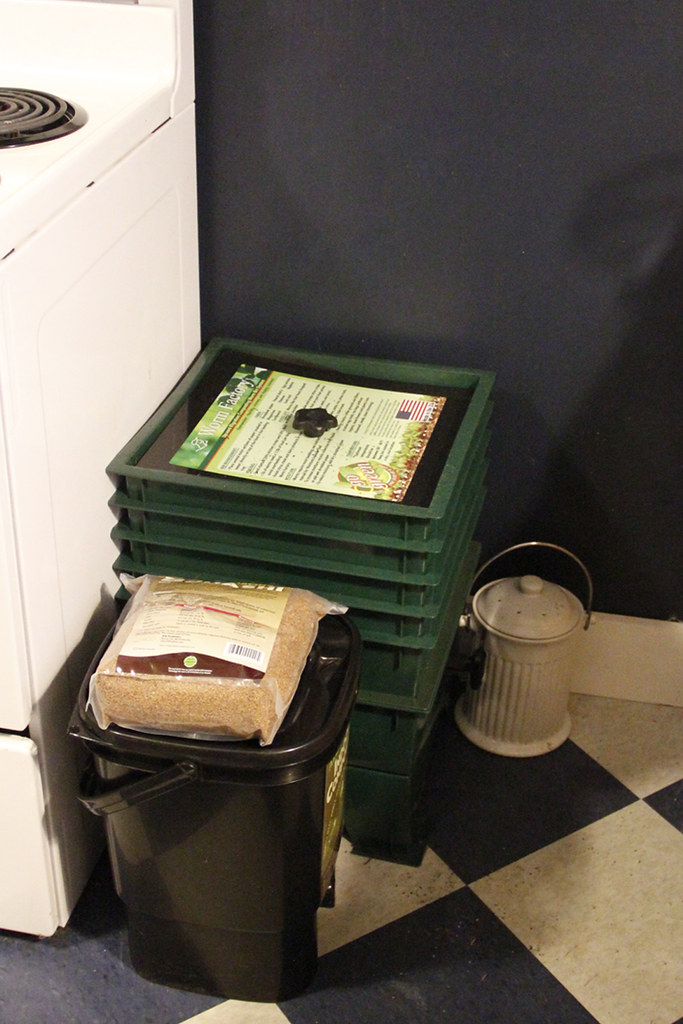
In case you haven't noticed, we take our compost pretty seriously. There's a worm bin in the kitchen, and passive piles (sometimes hot...but to be honest I haven't had much time to keep turning them so they're passive for now) in the yard. The chickens do a lot of compost work by eating veggie scraps, but we don't give them spent coffee grounds, onions, garlic and a few other things; our worms get those.
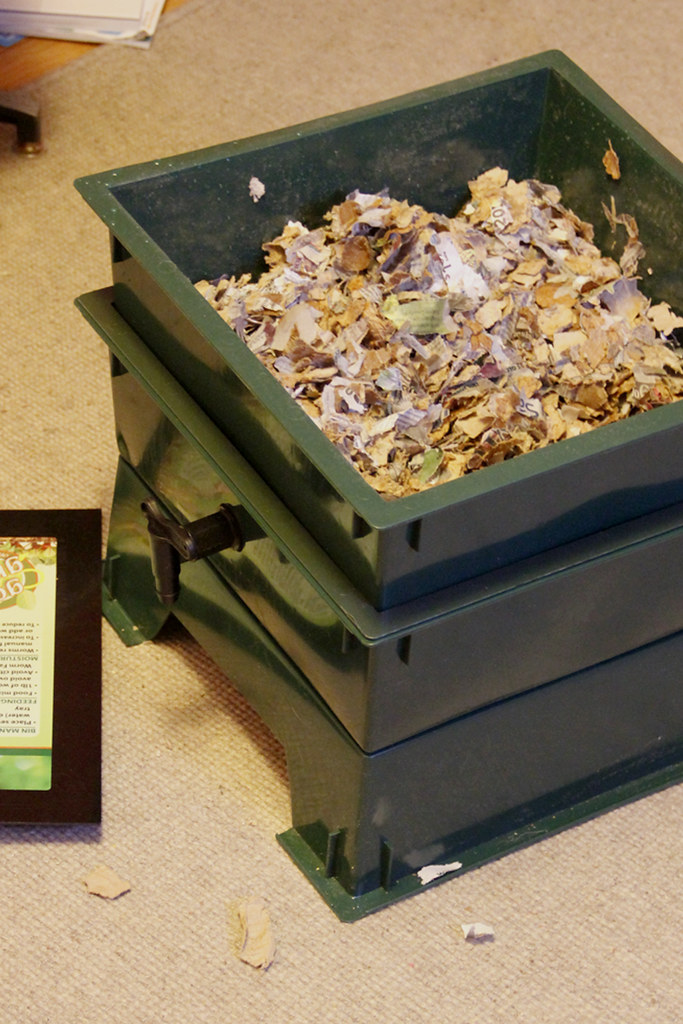
The worm bin, though was too awkward for our new kitchen arrangement. In order to get into some of the cabinets the bin had to be moved, and worms don't particularly care to be bothered with that. They like to have little by way of change, so I'd been considering a vertical worm bin for some time. We'd kept them going for 3 years in the storage tote bin, I finally decided it was time to move them to something a little fancier: a Worm Factory. Lucky for me, I know a guy.
I got in touch with my friend (and fellow Master Composter) Stefan and ordered the Worm Factory and a bokashi bucket. {Because if you're going to have worms in your kitchen you might as well have fermenting waste as well, right?}
Bokawha? Bokashi is an anaerobic form of composting. You're basically fermenting the food scraps. I thought we should add that to our composting repertoire because you can add bones and dairy to the bokashi bin.
Adding meat to my diet way back when created a new challenge for our household food waste. Before, when there was meat in our house, it was only Charlie's meals and I wasn't a fan of touching/preparing the stuff, so everything was of the heat-and-serve variety that no longer resembled the formerly living creature it once was. No skin, no bones, no fat to cut off.
Now, though, the meat comes straight from the farmer; it looks like meat, there are bones, there is skin, there is fat. Usually trimmed fat and skin go to the furry kids, but bones pose a risk so they are sometimes used for broth preparation, but ultimately go to the landfill.
After little rearranging in the kitchen, the worms are in their new home and the bokashi has started a-brewing. I'll keep you filled in as things progress, but for now I love the fact that I can open the cabinets without shifting everything around. A bonus for the new set up? The two new bins take up less space than the old worm bin alone!
The worm bin, though was too awkward for our new kitchen arrangement. In order to get into some of the cabinets the bin had to be moved, and worms don't particularly care to be bothered with that. They like to have little by way of change, so I'd been considering a vertical worm bin for some time. We'd kept them going for 3 years in the storage tote bin, I finally decided it was time to move them to something a little fancier: a Worm Factory. Lucky for me, I know a guy.
I got in touch with my friend (and fellow Master Composter) Stefan and ordered the Worm Factory and a bokashi bucket. {Because if you're going to have worms in your kitchen you might as well have fermenting waste as well, right?}
Bokawha? Bokashi is an anaerobic form of composting. You're basically fermenting the food scraps. I thought we should add that to our composting repertoire because you can add bones and dairy to the bokashi bin.
Adding meat to my diet way back when created a new challenge for our household food waste. Before, when there was meat in our house, it was only Charlie's meals and I wasn't a fan of touching/preparing the stuff, so everything was of the heat-and-serve variety that no longer resembled the formerly living creature it once was. No skin, no bones, no fat to cut off.
Now, though, the meat comes straight from the farmer; it looks like meat, there are bones, there is skin, there is fat. Usually trimmed fat and skin go to the furry kids, but bones pose a risk so they are sometimes used for broth preparation, but ultimately go to the landfill.
After little rearranging in the kitchen, the worms are in their new home and the bokashi has started a-brewing. I'll keep you filled in as things progress, but for now I love the fact that I can open the cabinets without shifting everything around. A bonus for the new set up? The two new bins take up less space than the old worm bin alone!
12.02.2011
A few more Made in the USA suggestions:
Fashioned by leather and ceramic planter
LL Bean Boots (made in Maine)
Sorry for the short and sweet post, but we've had a crazy week and the crazy doesn't seem to be letting up any time soon! Hope you have a great weekend, and for those of you in Boston, come see Wolfie and the Sneak at Bazaar Bizarre.
If you're in Chicago, this weekend is Renegade Craft Holiday market!
Have a good one!
11.30.2011
American made goods for the DIYer/adventurist/homesteader
Although Charlie and I have decided to give each other a surround sound system rather than a bunch of small things, I keep finding things I think he'd really enjoy. Of course, sometimes I'm totally off about that zany fella, but anyway...
All of these items are American made, too! What do you think? Have an adventurist/homesteader spouse for whom you need gift ideas? Here are the sources:
10.11.2011
an equation of simple human kindness
I find Occupy Wall Street compelling. I feel connected to it in a way, mostly because of my own history working for corporations that have no seeming regard for the quality of life of its employees. . . well, the employees doing the face-to-face work with the consumers. As a store manager for one such corporation I was admonished on several accounts for hiring employees at $8 an hour. That's $8 an hour, with no guaranteed number of hours per week, no benefits, and one free beverage a day. I hired a few twenty-something musicians, but also had a fair share of family bread winners working for me. for. $8. an. hour. people with kids, no guaranteed income, no family health insurance.
Yep, they're making your $4 latte, ringing up your clothes at the mega store, and bagging your groceries.
I no longer work for that company but could tell you countless stories of profit margin winning out over the opportunity to treat their workers with simple dignity. Needless to say, I don't buy their products either.
Those experiences as corporate peon have shaped the values we hold dear in our household today. All preachiness aside, asking corporate giants to be kind and respect each individual for their skills, talents and abilities isn't anything new. This is exactly why we DIY. It's also why we vote with our dollars.
Companies that value me receive my valuable money. It's an equation of simple human kindness that we can all opt to invest in.
Want to know about the goodies I've picked out to go with this post?
Quill and Arrow Press Vonnegut postcard made in Penland, NC
Aurora Shoe Co. West Indian shoe made in Aurora, NY
Raleigh Denim made just up the road in Raleigh, NC with fabric made in Greensboro, NC
Shuron Eyewear made in Greenville, SC.
Kids's shoes handmade in the USA by Austin, TX-based Bear Feet kids's shoes
Yep, they're making your $4 latte, ringing up your clothes at the mega store, and bagging your groceries.
I no longer work for that company but could tell you countless stories of profit margin winning out over the opportunity to treat their workers with simple dignity. Needless to say, I don't buy their products either.
Those experiences as corporate peon have shaped the values we hold dear in our household today. All preachiness aside, asking corporate giants to be kind and respect each individual for their skills, talents and abilities isn't anything new. This is exactly why we DIY. It's also why we vote with our dollars.
Companies that value me receive my valuable money. It's an equation of simple human kindness that we can all opt to invest in.
Want to know about the goodies I've picked out to go with this post?
Quill and Arrow Press Vonnegut postcard made in Penland, NC
Aurora Shoe Co. West Indian shoe made in Aurora, NY
Raleigh Denim made just up the road in Raleigh, NC with fabric made in Greensboro, NC
Shuron Eyewear made in Greenville, SC.
Kids's shoes handmade in the USA by Austin, TX-based Bear Feet kids's shoes
10.10.2011
these are a few of my favorite things
art supplies that provide little disturbance to the beauty I try to capture {Belly of Flea watercolors and inks}
navy skies filled with twinkling stars {Christine Buckton Tillman nails it with screen print}
blue-gray transitioning to the peachy tones of sunsets - the hues of Sandra Juto wristworms
Subscribe to:
Posts (Atom)